
Stop Trying To Make A Difference
Clowns, Clickbait, and the Economy of Attention

Making a difference was not your job.
I was listening to a podcast episode last week in which the host said these words in regards to the Artemis II astronauts and their mission to the moon. At first, I was confused.
The podcast host explained how one of the astronauts had been told that their trip to the moon had “really made a difference here on earth”, because it got so much attention and people were inspired and there was a major positive vibe about the whole thing. Apparently, that astronaut teared up at being told they had “made a difference” and said in reply, “that’s what it’s really all about.”
The podcast host disagreed. He said no; it was not all about “making a difference.” It was actually all about getting around the moon and back safely. That was the job, which the Artemis II astronauts thankfully accomplished.
This take made me think for a long time.
If you will take a moment to look around, you will quickly realize that we live in an Economy of Attention. Attention is the currency of the day; it is bought, sold, traded and discarded like loose change and poker chips.
Because of smartphones and social media, everyone has access to the Economy of Attention in a real way that wasn’t even imaginable before. Anyone can watch and follow anyone else they like. There are few gatekeepers.
This also means that anyone who wants to can try to become wealthy in the currency of attention. Anyone with a smartphone and internet access can make content and post it, effectively pushing their set of poker chips to the center and hoping to win big.
The idea of social media “influencers" has been around for about twenty years now. This term refers to “a person who has become well-known through use of the internet and social media.”
The term influencer is interesting. To become an influencer is to grow an online audience, thus growing the power of your own voice to “influence” people in one way or another. You have power to make a difference, and that’s what it’s all about, right?
But now the problem comes. When everyone has the same access to the game as everyone else, you have to make yourself stand out. You have to be different from the crowd, so you can get attention. And so, by the very nature of the system, the people who are willing to say or do the craziest stuff are the ones who get attention, and thus win the game.
The Economy of Attention does not favor truth, it does not favor beauty, and it does not favor the good. It only favors attention, and thus it favors outrage, shock and awe, bombast, hot takes, and general idiocy.
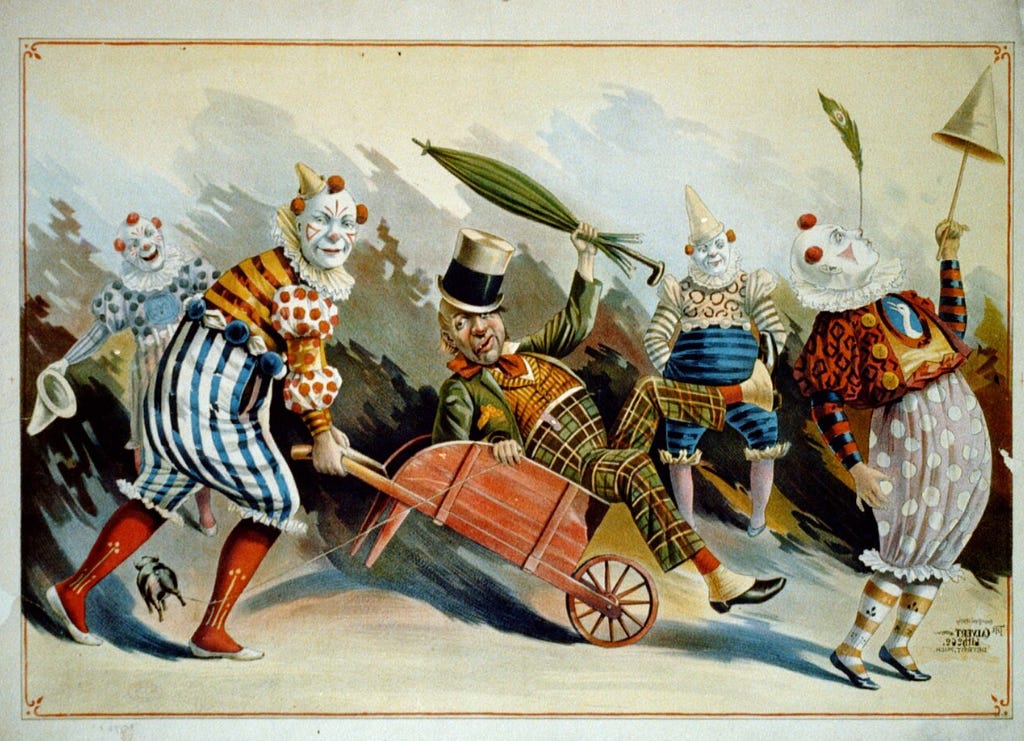
Do whatever it takes to get attention, and then you can make a difference. And so, like circus clowns, we degrade ourselves for a moment of attention and stupid laughter, telling ourselves that we are making a difference.
I am not a fan of the new camp of right-wing America led by voices such as Tucker Carlson and Candice Owens. I know there are some who will read this who will disagree, but it seems to me that they have fully committed to the Economy of Attention. They are very good at it, but in the end they must constantly be saying even more extreme things and having even more radical takes, in order to continue to keep and grow their audience. They are masters of clickbait; they play devil’s advocate with no anchor point.
This is what I call the Law of Attention: when there’s a high amount of things to pay attention to, one must continually increase the level of crazy in order to separate from the crowd.
There are others I know of who are trying their best to become one of these view-farming clowns, although on a much smaller scale, and they are not half as good at it. They are making fools of themselves. Maybe you know some of these people too.
In the Economy of Attention, value is measured by attention alone. Think for a moment about how many viral videos contain anything worthwhile at all? Their value is solely based on how high that view counter can climb.
Everyone wants to have a million “followers”, but does anyone stop to think about where are you want to lead them to? Anywhere good? Anywhere at all? To anything worthwhile? Simply having “followers” is not a goal. Having followers requires a destination.
Leo Tolstoy, the great novelist, said this:
“Everyone thinks of changing the world, but no one thinks of changing himself.”
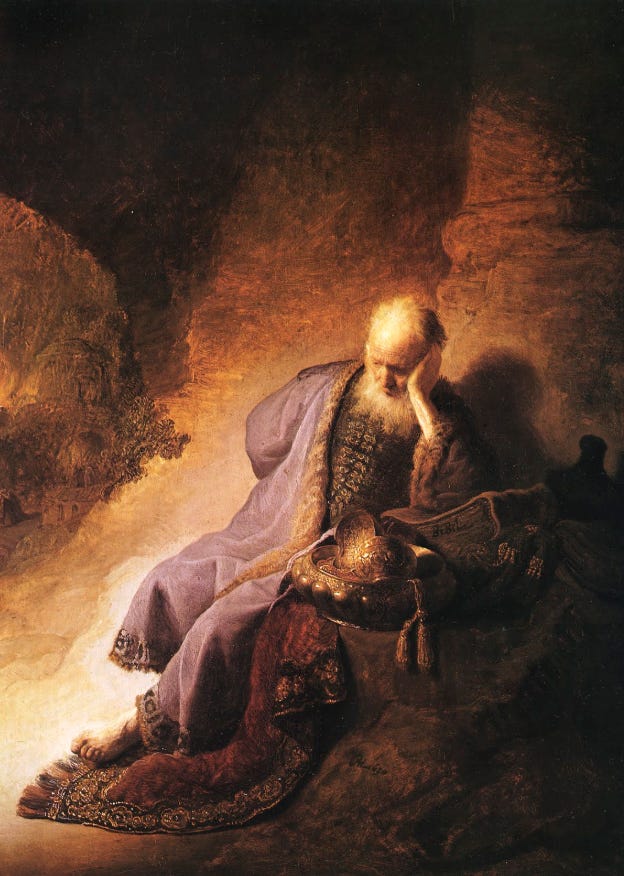
Changing the world is a bad goal. You’re not going to, I’m not going to. The difference that our lives make is out of our control. We might get a lot of attention, we might lead a nation and receive the praise of thousands and ten thousands, like King David in the Old Testament. Or, we might end up thrown into a hole in the ground because we spoke the truth like Jeremiah, and not a single person ever listened to what we said; or we might find ourselves covered in boils and ashes with all our children dead for no apparent reason at all, like Job.
But it is not difficult to realize that the value of those three lives is not measured by the amount of attention they got, or even by the amount of influence they had on the world. In fact, God told Jeremiah that no one was going to listen to him. He was going to have zero followers; he was not going to make a difference. But he spoke the truth in his day regardless, because it was never about that in the first place.
The podcast host I referenced at the beginning went on to talk about how instead of focusing on making a difference in the world, it is important to focus on doing our jobs. Each of us has a task to complete. We play different roles in our lives, and these are the things we must work at. If you are an astronaut on Artemis II, your job is going to the moon. If it “makes a difference” on earth, that’s great; but that’s not the job. It would still be just as successful if no one talked about it. If you are a teacher, your job is to be the best teacher you can be. Hopefully, you will make a difference in your students’ lives; but that is not your job. Your job is to be a good teacher. If you are a musician, a parent, a pastor, a sports players, a writer, a farmer, a doctor, a politician, a scientist, a librarian, a banker, a hedge fund investor, a real estate agent—your job is not to make a difference. Do your job, do it well, and become the kind of person God made you to become.
Make good things, not for the sake of attention but for the sake of it being good. Make beautiful things, not for the sake of attention, but for sake of making something beautiful. Say true things, not for the sake of attention, but for the sake of speaking the truth. Make something worthwhile, something that has value regardless of how much attention it gets.
Stop trying to make a difference. Step away from the show and take off the clown make-up; maybe you’ll find there’s something beautiful underneath.
Thanks for reading! If you have thoughts, message me or leave them in the comments. If you find content like this helpful in some way, like, share, subscribe, comment, shout it from the rooftops and proclaim it down the streets. Every little bit helps, and feedback of all types is warmly welcomed.
Till next time,
Josh
So good! Matt and I have talked about a similar idea—that the idols we tend to worship are extremists (for instance, Olympian athletes) and their lives are plagued by a lack of balance. These are not the people we should want to model our lives after . . . but the people who are perfecting balance in their lives are not visible to society.